 Language
 前に戻る
前に戻る



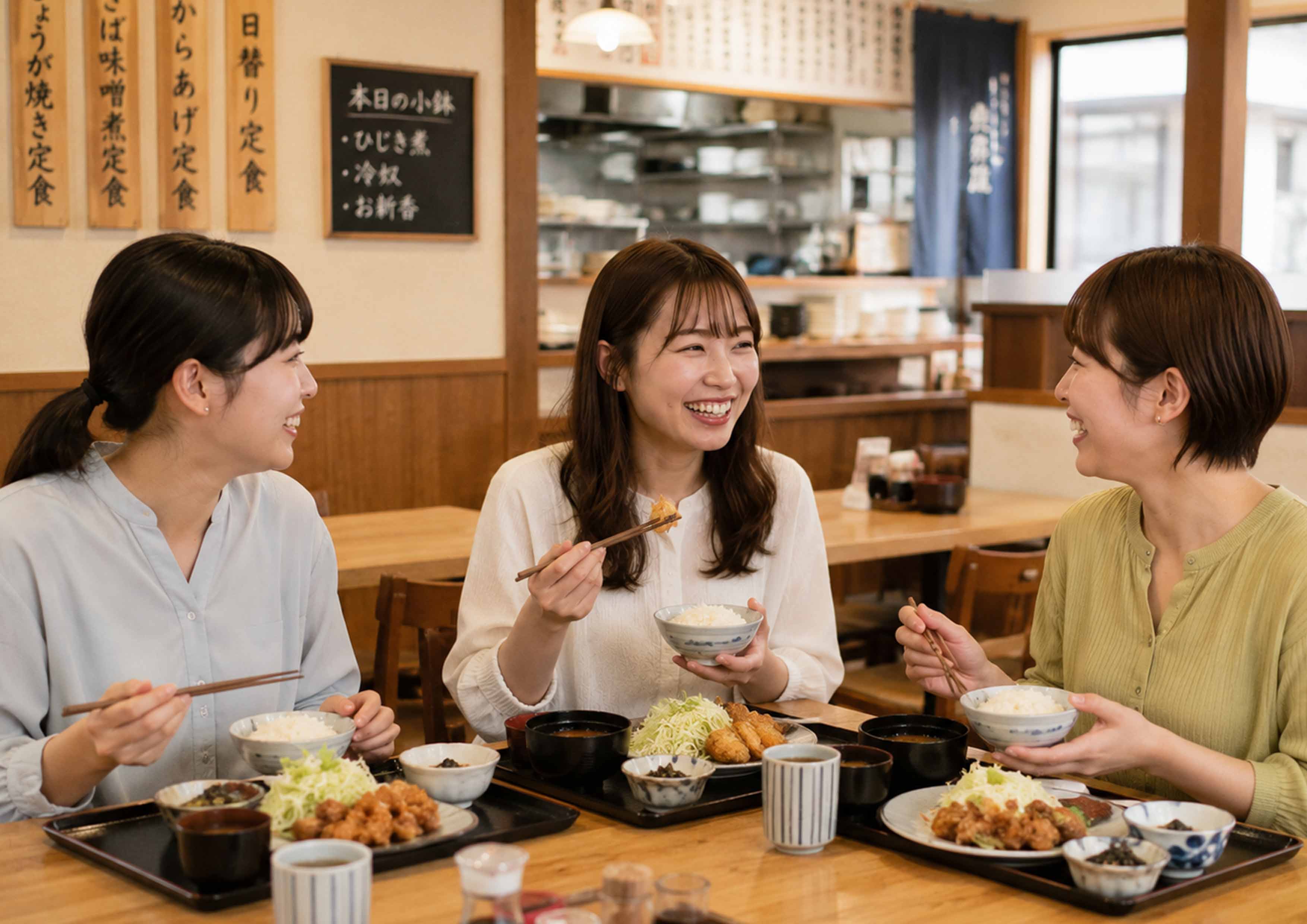
In today’s world, where there are more and more opportunities for people from different cultures to interact with each other, it is very important to understand each other’s “manners”, not only when it comes to dining etiquette. Each country and region has its own manners. Some of them are common, while many are very unique. There are also many things that could only be said to be unique to that era. Especially in recent years, many foreign visitors have visited Japan. They come not only for business, but also for various purposes such as studying, sightseeing, and so on. Because of them, we have been hearing a lot of opinions or impressions about the manners of overseas people from our point of view, or conversely, about the manners of Japanese people from the point of view of people from overseas. In addition to conventional media such as TV, newspapers, books, etc., there is also information from social networking services that are transmitted by individuals, so there are many more opportunities to see and hear such information. Well, some of them are favorable, while others are still negative. We think it would be very wonderful if through them, we could get a better understanding of the differences of manners in each other’s cultures… Each country and region has different manners, and we don’t think it is possible to determine which is correct. We should not be able to say that because one is the majority, that one is preferable to the other, can you? Each of them has a different history and cultural background. However, what is common about the manners of all cultures is that they are based on the consideration that people other than oneself should not feel uncomfortable. Based on them, we think it is very important to understand the manners in each other’s culture. Below, we would like to introduce some of the topics that have been raised in Japan in recent years regarding manners during meals.
Talking during meals
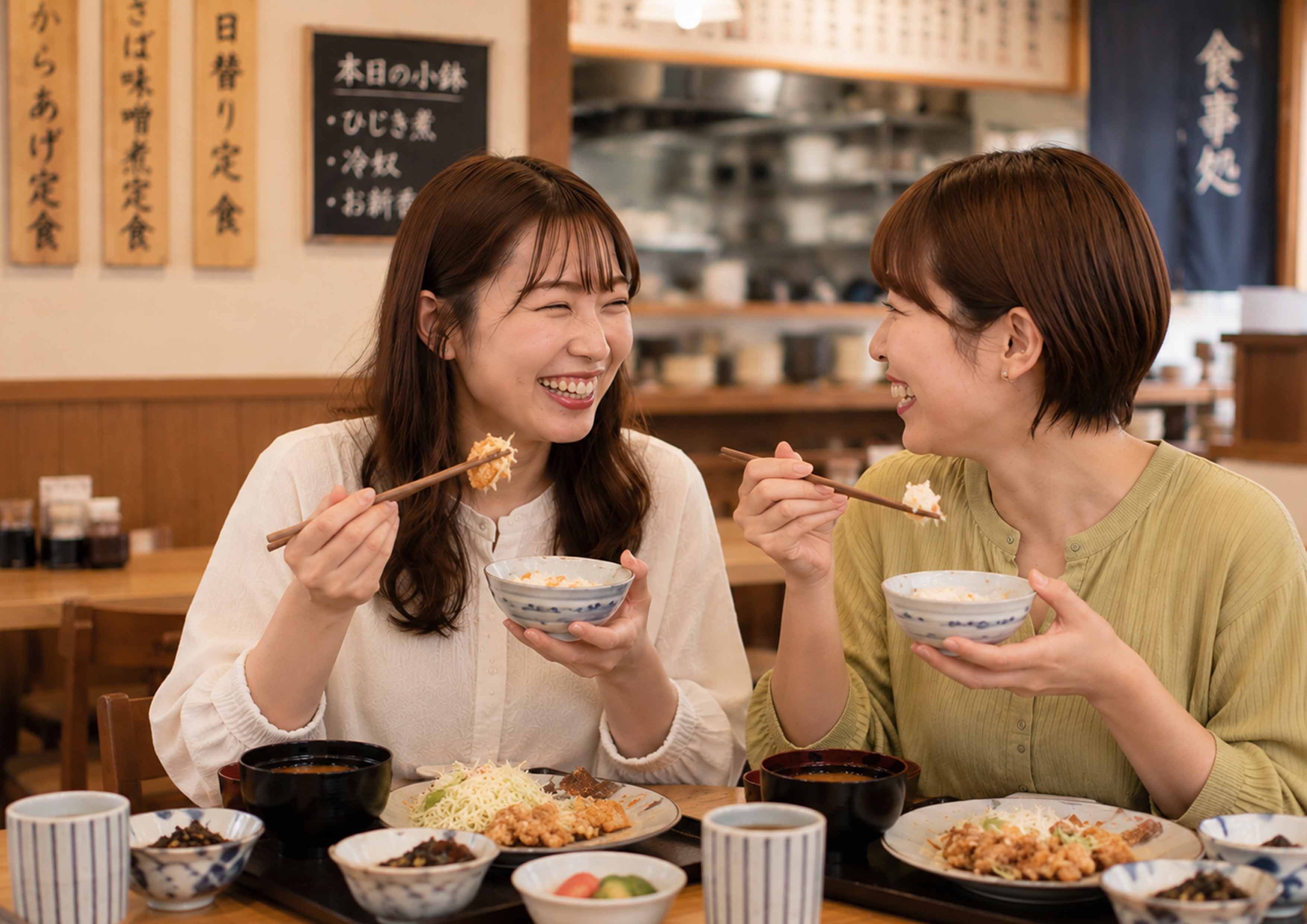
The manners of eating while doing something else vary from culture to culture. The most common will be “talking”. In many cultures, including Japan, it is considered bad manners to speak with food still in the mouth. However, in some cultures, conversation is encouraged at meals, while in others, so-called “silent eating” is considered good manners. Now, what about in Japan? Generally speaking, it is not against manners to have a conversation at a meal. They are not considered a breach of manners in restaurants, taverns, and other eating establishments. However, it is a prerequisite that you do not disturb other guests. Please do not make loud noises.
〇〇ing while eating
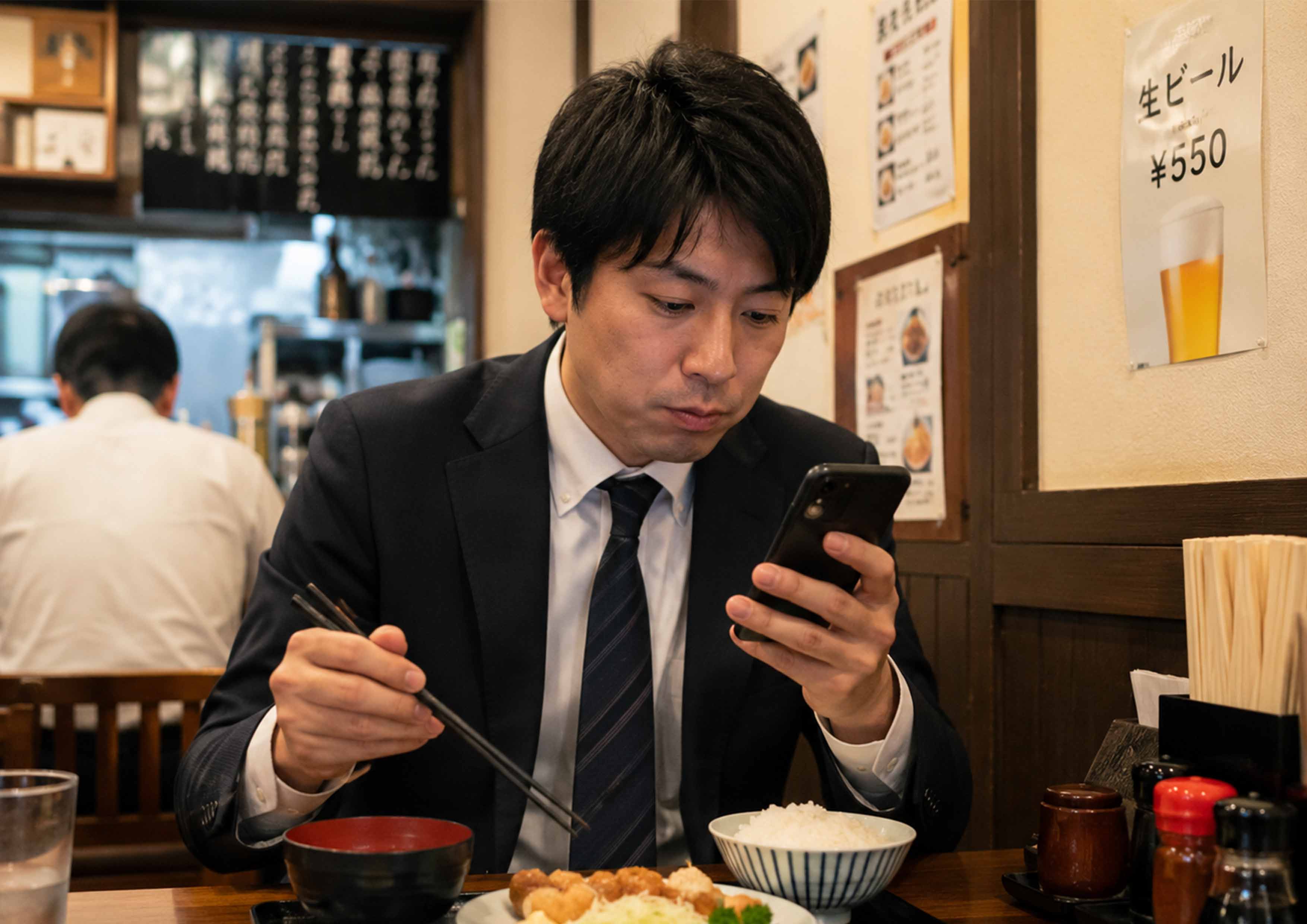
In recent years, “〇〇ing while eating” has become a very frequent topic of conversation in Japan. As for “talking during meals”, as mentioned above, but on the other hand, there is some disagreement as to whether or not using a smartphone, watching TV, working, etc. during meals is a violation of good manners. Umm, it might be due to circumstances unique to modern Japan… A decade or so ago in Japan, many families had many opportunities to eat together with their families. Therefore, depending on the way of thinking of each family, it was often the case that eating while watching TV was not allowed. Perhaps because of this, because it was generally accepted that “〇〇ing while eating” was not very good manners, people tended to refrain from doing so in public. However, in recent years, the family meal has become a separate meal for each individual as the family’s lifestyle of eating together has declined. As a result, the standards for what is acceptable or unacceptable in terms of manners with regard to “〇〇ing while eating” have varied from person to person. These are apparently true for both men and women, young and old. Therefore… In today’s Japan, using a smartphone or watching TV working or etc. while eating may be accepted as perfectly normal or may give an impression of rudeness, depending on the person who is looking at it. We hope you will understand those very well.
Eating in rotation
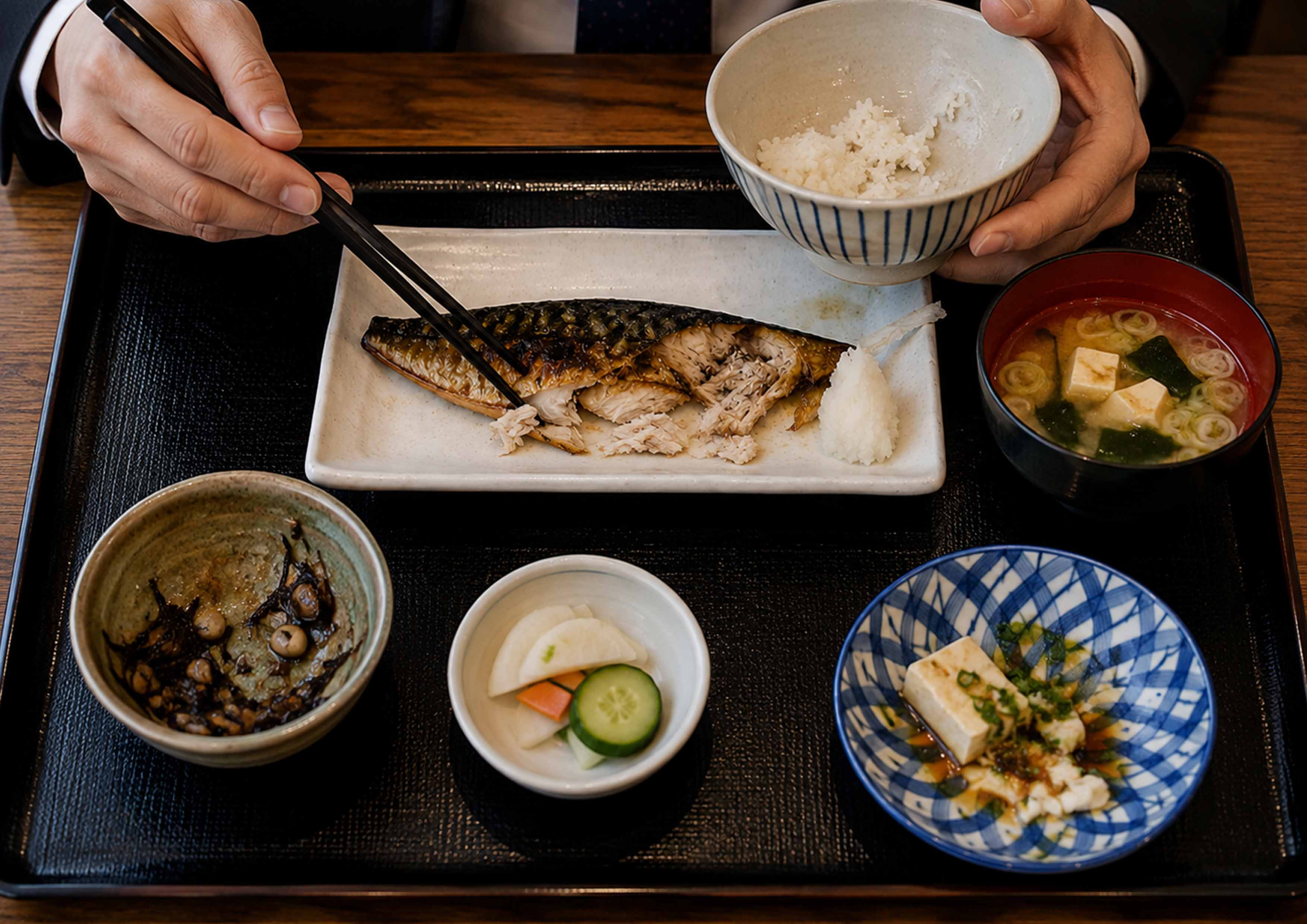
Main dish, side dish(s), soup, and rice. These are the four basic components of a Japanese meal. When ordering a set meal at a restaurant in Japan, this is usually the configuration of the set meal. Except for kaiseki cuisine or other course meals, these dishes are usually served at the same time in Japan, but what is the correct or recommended order of eating them? There are probably some of you who have such questions. One of the answers is the “Eating in rotation” method called “Sankaku-tabe (Triangle-eating)”. Let me briefly explain this. In other words, the preferred way to eat any of the dishes is to eat them all at the same pace, this is one of ways to do that. Not to finish each dish in turn. For example, “Main dish→Side dish→Rice”, “Soup→Side dish→Rice”, “Soup→Main dish→Side dish”…, in this way, you eat three different kinds of dishes in different orders as a set. The Japanese set meal is a dish composed in such a way that all dishes are supposed to be eaten at the same pace. According to one theory, this manner was born out of the consideration that it is undesirable to have an empty vessel exposed to the eyes of the guests for a long time.
Eating disrespectful to the served plates
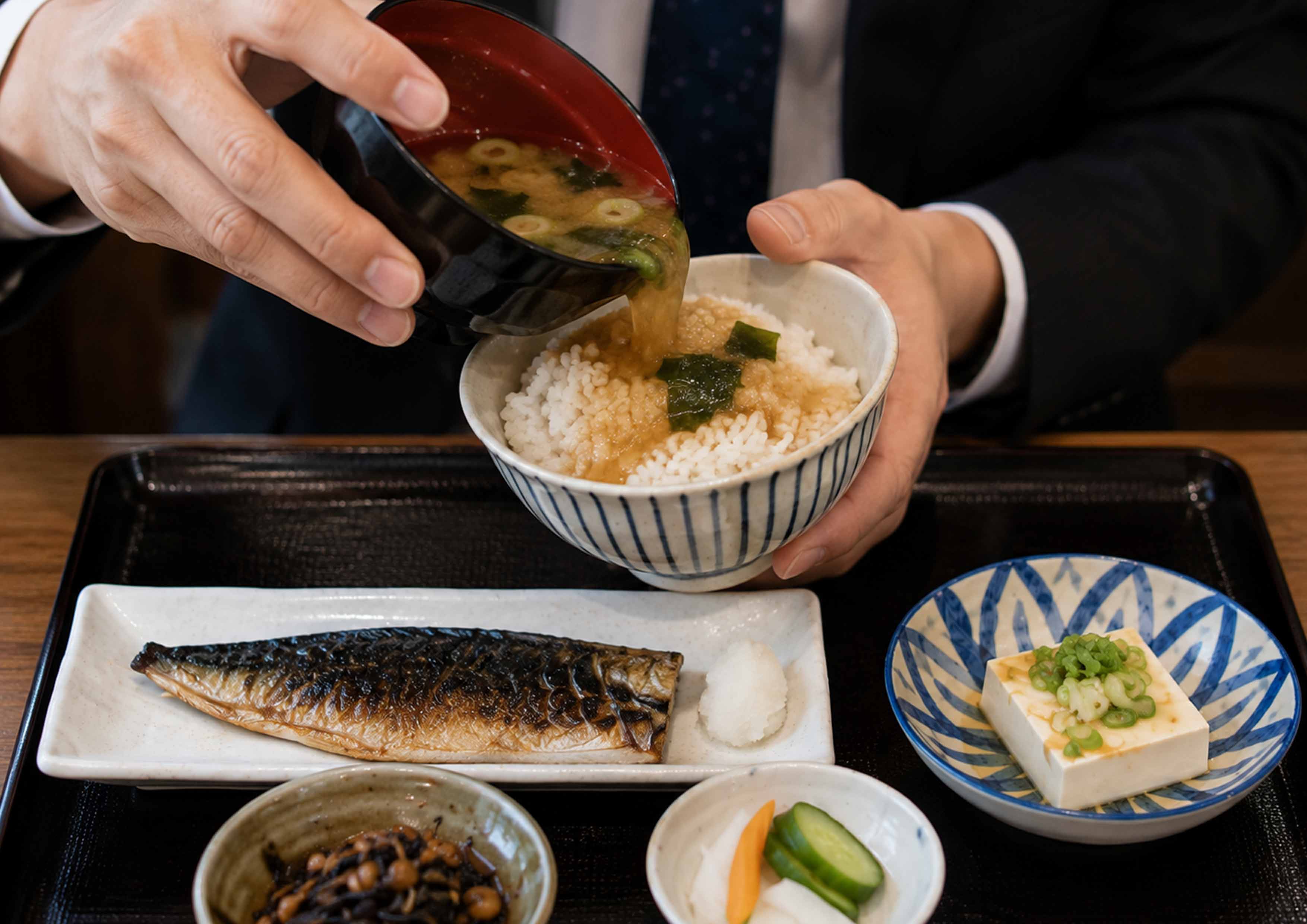
Every dish has a fundamental way of eating it that is assumed, and it is plated according to that assumption. In other words, eating in a manner that deviates from the way the person who prepared the dish intended is fundamentally considered a breach of etiquette. There’s no perfectly fitting phrase for that, so we’ll refer to it here as “Eating disrespectfully toward the served plates”. In traditional Japanese set dishes, which typically consist of rice, soup, and several side dishes, “Neko-manma” has long been considered a breach of etiquette. (※Literally translated, “Neko-manma” means “cat food”.) “Neko-manma” is a way of eating by pouring soup over rice or putting rice into soup. Japanese cuisine has quite a variety of dishes where rice is poured over soup or mixed into soup for cooking, such as Ojiya(rice porridge), Zosui(rice gruel), Hiyajiru, Ochazuke, Hitsumabushi, and etc. And most of these dishes are easy to eat and delicious. Therefore, many Japanese people feel a sense of familiarity with the practice of soaking rice in soup. Of course, there are differences in the degree of individual preference. The aforementioned dishes such as Ojiya and Zosui are dishes served with rice already mixed into the broth. Furthermore, dishes like Ochazuke or Hitsumabushi are designed to be enjoyed in various ways. However, the rice and soup served with set meals are still different from those. They are meant to be eaten separately, just as they are served. The same applies to other side dishes and the way they are eaten. Even though they are served separately and meant to be eaten separately, putting side dishes on top of rice or mixing them in is fundamentally considered a breach of etiquette.
Eating different dishes in the mouth at the same time
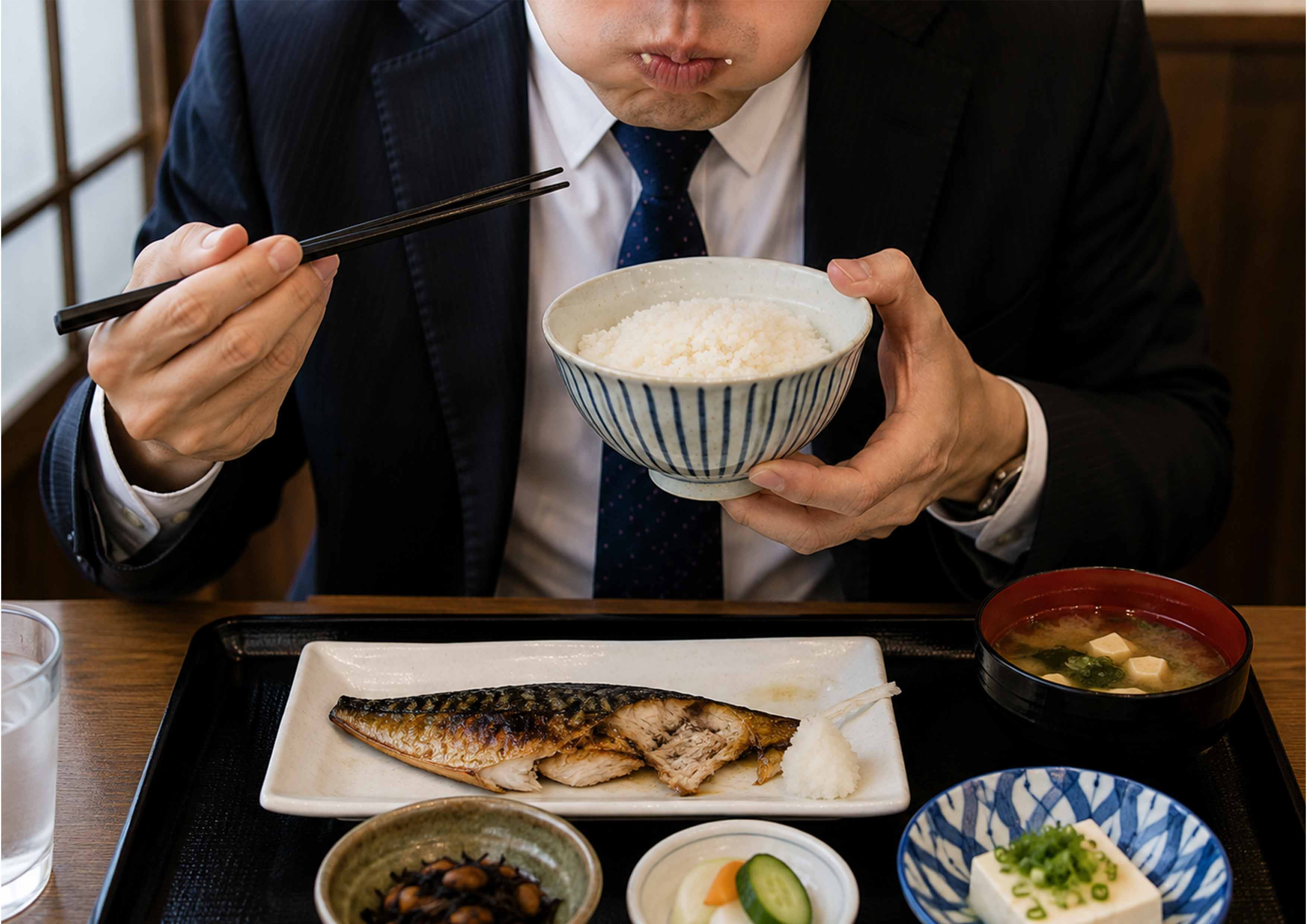
Here is a recent topic of conversation in Japan. Is it bad manners to eat different dishes in the mouth at the same time or not? The best example is rice and a main dish(or side dish). Or a combination of rice and soup. It seems that many Japanese eat rice with the main dish, side dishes, and soup still in their mouths. Perhaps many Japanese may have been confused. Because, there is a widespread culinary culture of “Donburi dish”, a bowl of rice topped with a dish that serves as a side dish in Japan. This “Donburi dish”… Once in the mouth, it is no different than having rice and different dishes in the mouth at the same time. Well, there is still some controversy about this way of eating. Although rice consumption has decreased, it might be still a manner problem unique to Japanese food, which is based on the rice-eating culture. So, we would like to raise one opinion on this issue that “I” also personally agree with. We think it is appropriate to match this manner of the meal with the style in which it is served as a dish. In the case that main dish, side dish (sometimes more than one), soup, and rice, each served as a separate dish, you should not be placed in the mouth at the same time, which is the correct way to eat. On the other hand, when a dish is presented as a single dish, such as a “donburi dish”, it is obviously preferable to eat it as it is. In recent years, a great many personal opinions have been expressed and discussed about these dining manners. It is good that there are many interesting opinions. However, we don’t like that some of them have a one-sided critical and negative tone…
Chewing noises
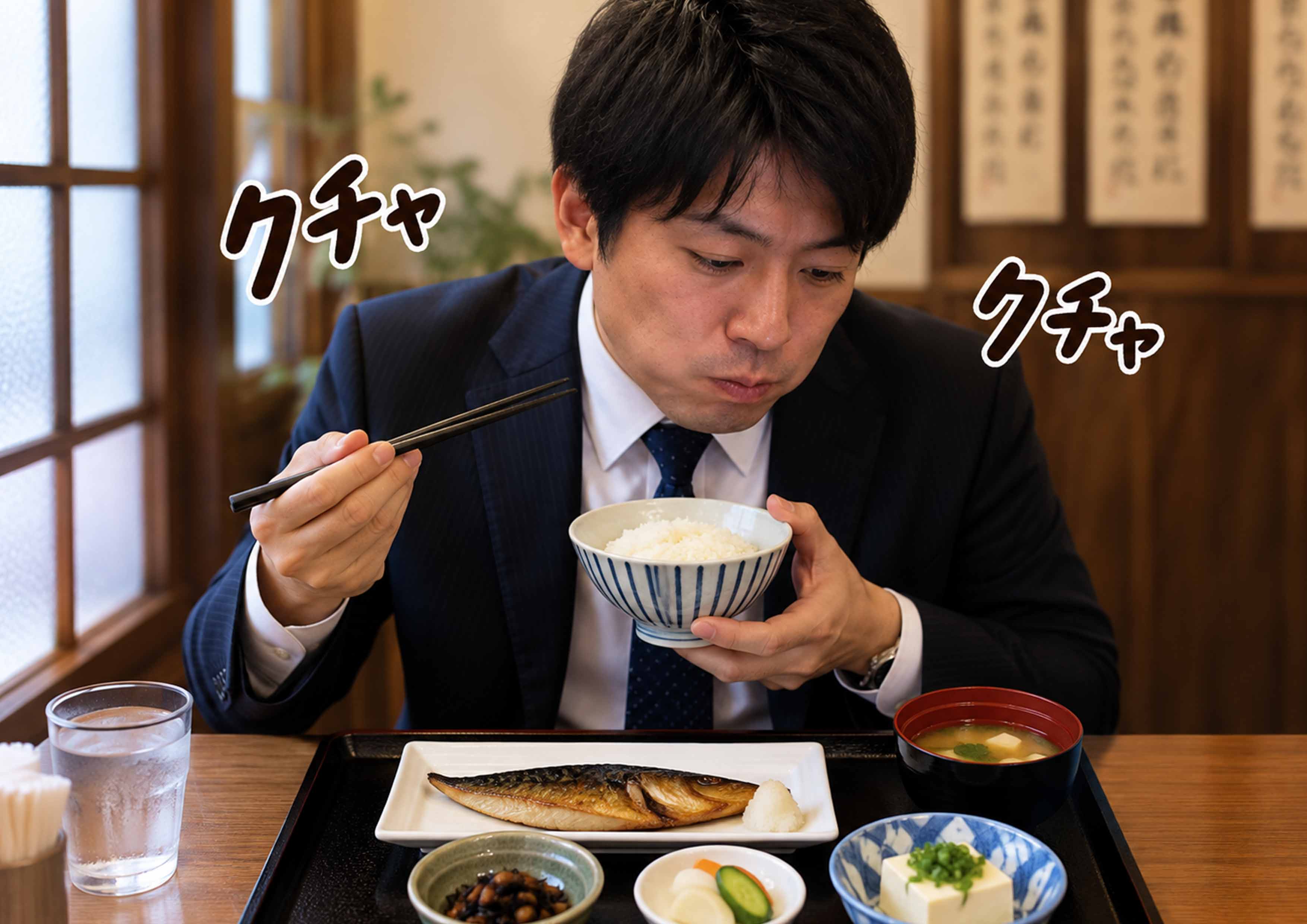
There are several dishes that inevitably make noise when eaten. Many fried and grilled dishes, fresh vegetables and fruits, etc., have the sound they make when eaten as part of their charm, right? In Japanese food culture, the sound of slurping noodles when eating noodles is one such example. However, what we am going to talk about here is something completely different from the sounds mentioned above, and is about chewing noises that are emitted at an unnecessary volume. For a while in Japan, the term “Kuchara (it means “noisy eater”)” became popular to describe a person who makes a chewing sound as if he/she were chewing a large amount of gum. It is still considered bad manners to make unnecessary loud chewing noises. As a matter of fact, this chewing sound that makes people uncomfortable is often something they are not even aware they are making. Please be careful that you are often unknowingly causing discomfort to others?
Putting the elbow/Sitting with knees up
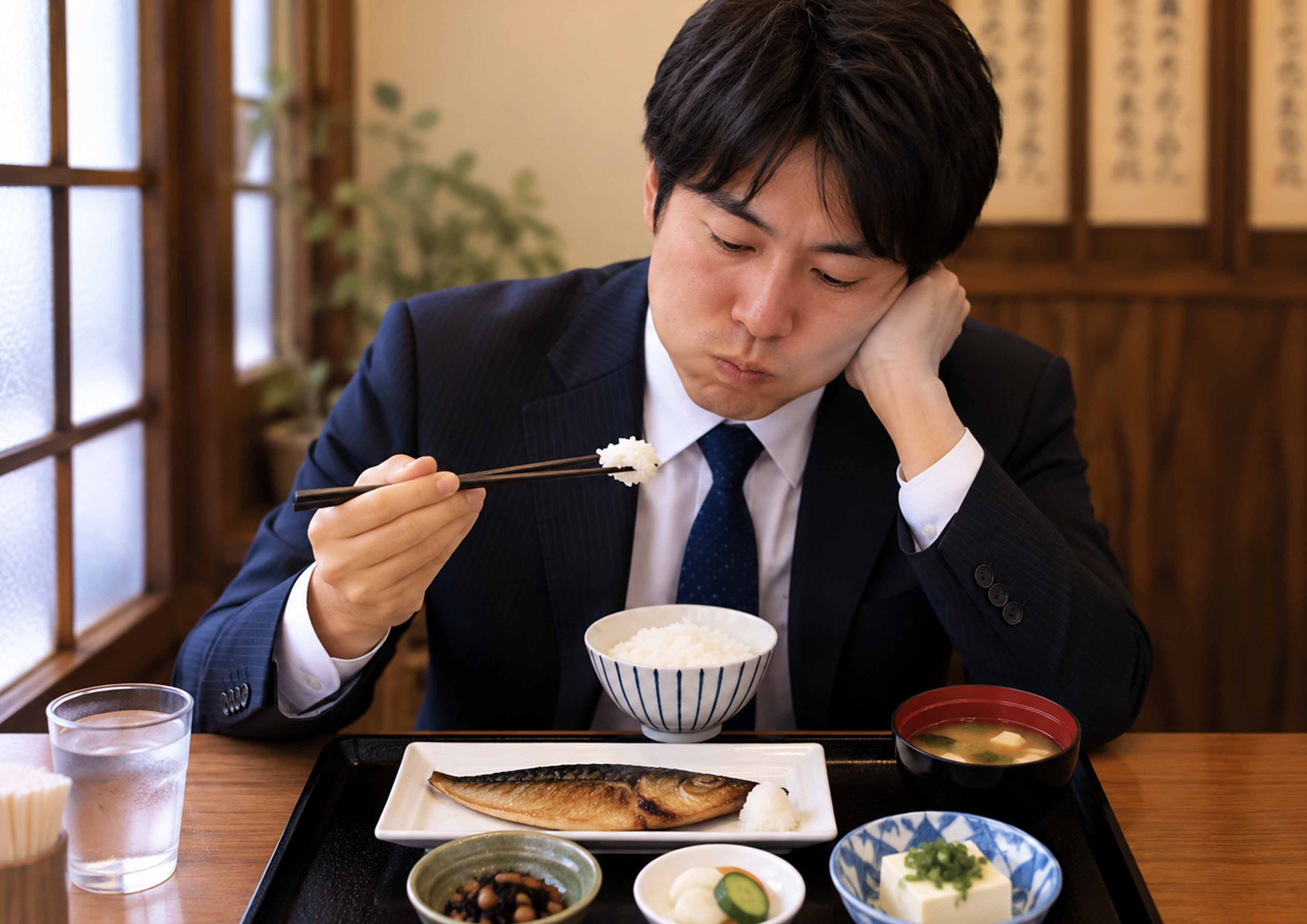
Posture and sitting while eating also differ from culture to culture, don’t they? Even if you eat at a table, on a chair, or on a sofa, it is quite different from sitting on the floor and eating at a table, etc. In Japan, there are many opportunities to experience both cases, and in both cases, “Putting the elbow / Sitting with knees up” is considered bad manners. Although the evidence is not very clear, it seems that this has been the case since ancient times. One theory is that the reason for this is that in kimono culture, postures and sitting positions that cause dressing down have been considered immodest. Of course, in the case of current Japanese daily clothing, “Putting the elbow / Sitting with knees up” does not cause dressing down, but the aesthetic values of the posture and sitting posture seem to have been passed down from generation to generation.
Use of toothpicks
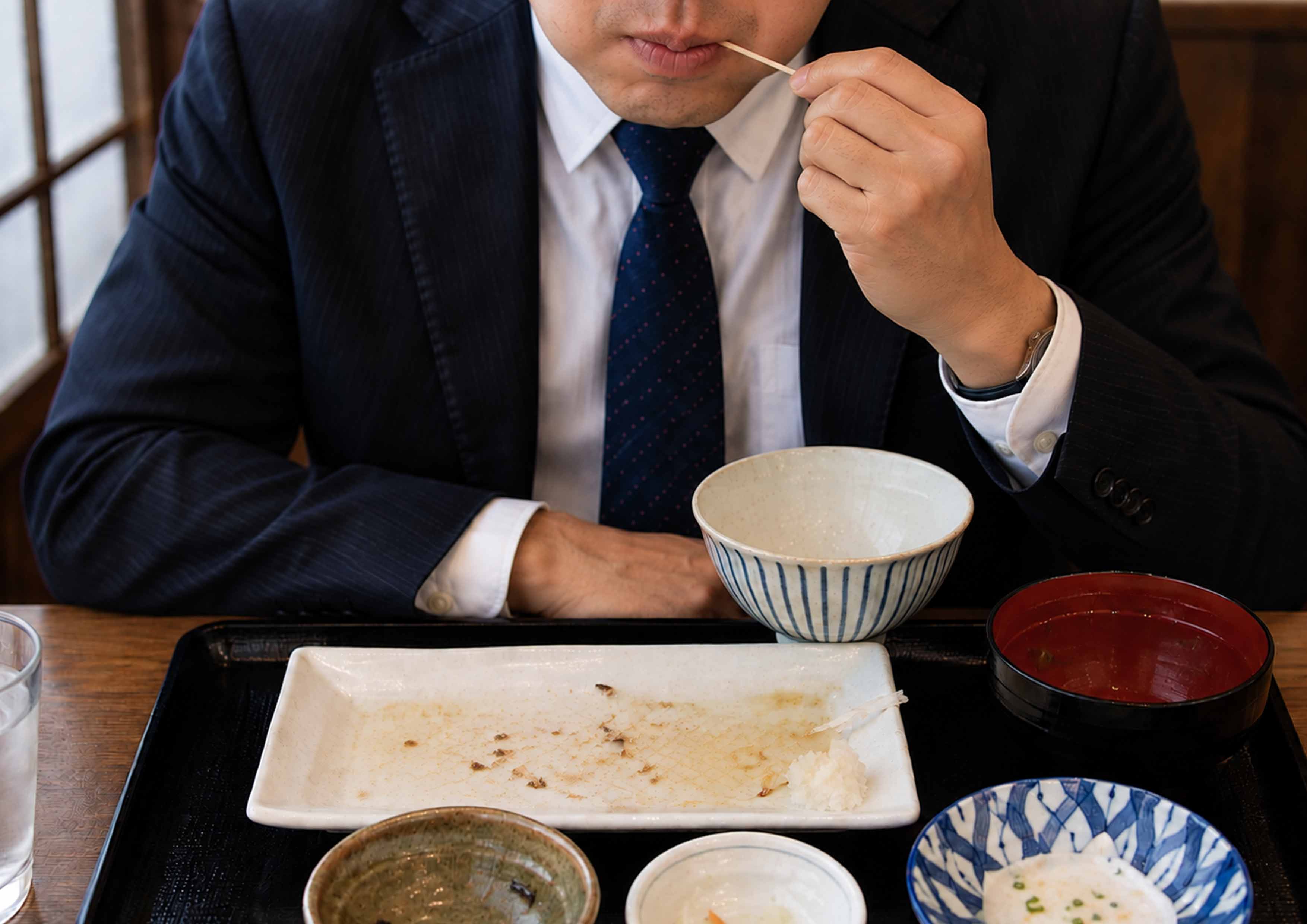
Although it is becoming less common these days, Japanese restaurants often provide free toothpicks on the table. Of course, this is a consideration on the part of the restaurant so that customers can use it after their meal. As is probably the case in many cultures, the use of toothpicks after eating is not against manners in Japan. However, it is not advisable to use them in a big way. It is important to be considerate to those who are seated at the table, as well as to other customers in the same restaurant, and to use it inconspicuously. If possible, it might be better to move to a restroom or something and use them.
Smoking
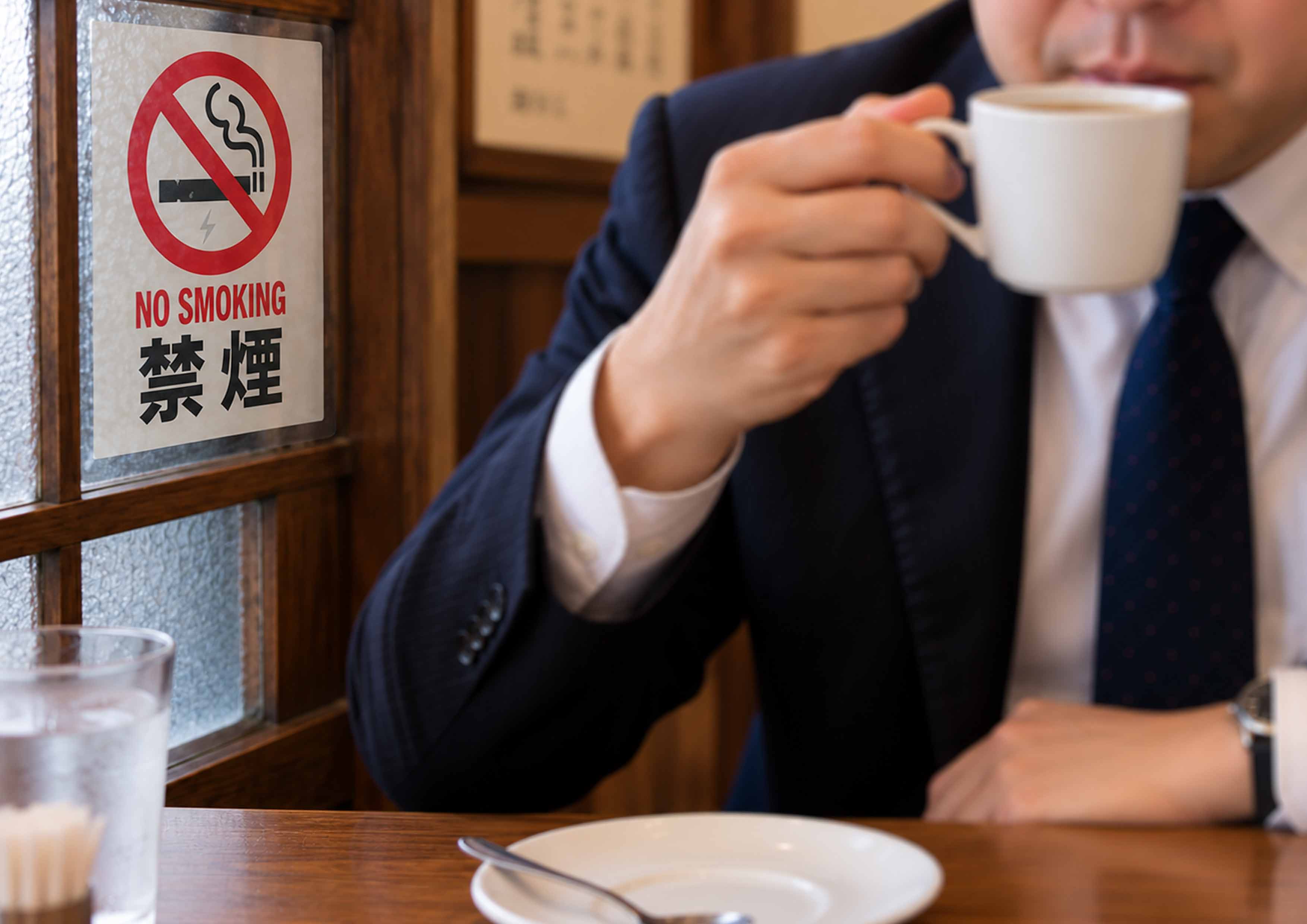
Since the 2000s, one of the manners that has completely changed is that related to smoking. Until about the 2000s, smoking during meals was not considered bad manners in Japanese restaurants, izakaya, and other eating establishments. There were separate areas where smoking was not allowed during meals and areas where smoking was allowed. Now, following a worldwide trend, smoking is almost entirely prohibited in spaces where meals are served. In some coffee shops, smoking is allowed while eating, but these are isolated spaces like booths. Also, it does not mean that a storefront (outdoors) is acceptable. Although some restaurants have some sort of smoking area, please note that in most cases, smoking is prohibited on the premises.





