 Language
 前に戻る
前に戻る



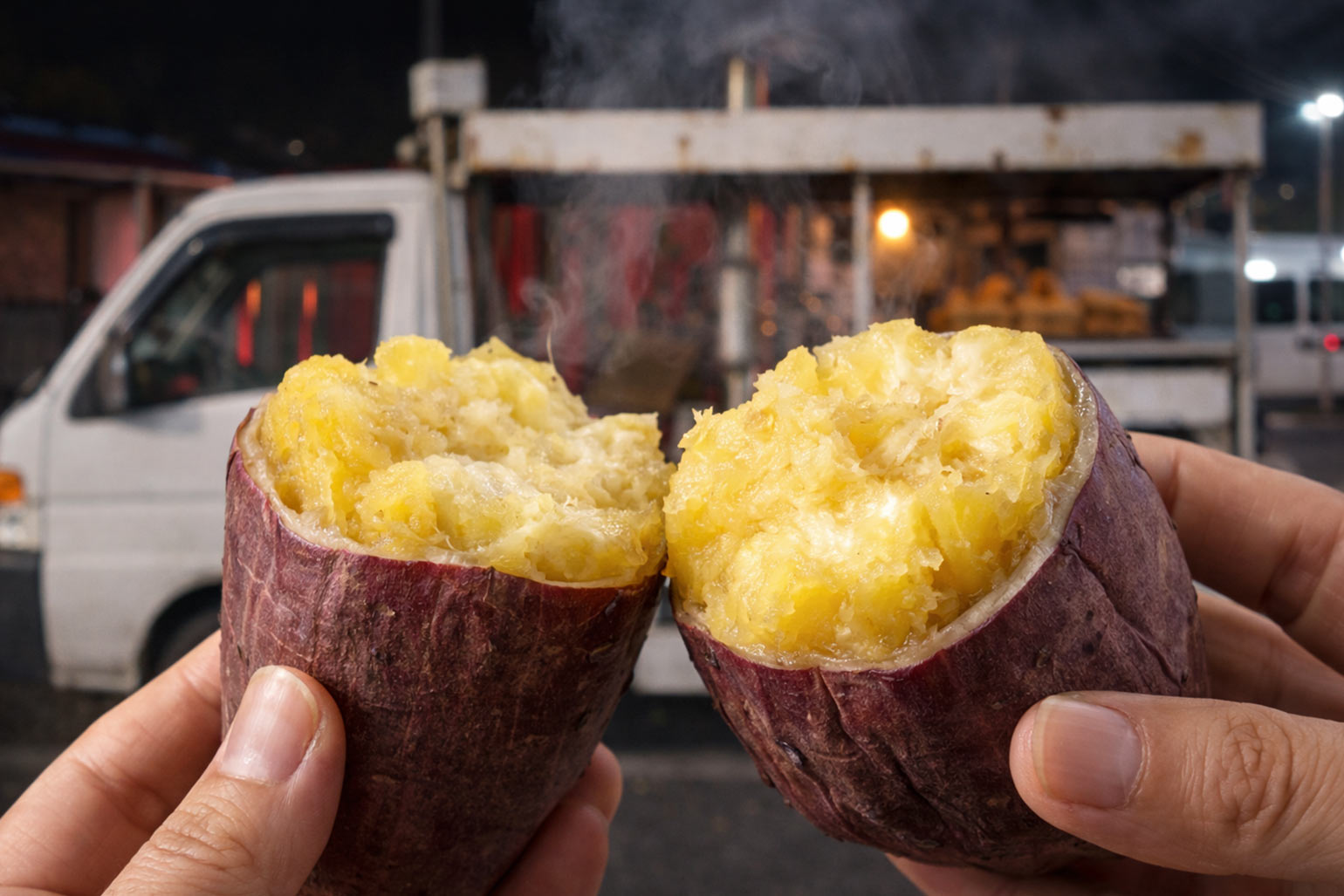
This time the topic is a dish made with sweet potatoes, “Baked sweet potatoes”. In Japanese, it’s called “Yaki-imo”. You might have the general impression that many Japanese sweets, including wagashi, are very delicate and intricately cooked. Among Japan’s many sweets, this roasted sweet potato remains incredibly popular to this day despite its extremely simple preparation process. Alongside Unshiu mikan, it can be considered one of Japan’s typical seasonal foods from late autumn through winter. Back in the day, it was a common sight to see dedicated vehicles selling roasted sweet potatoes slowly making their rounds through town during the winter months. Today, they have become staple seasonal sweets found in the food sections of large commercial facilities, supermarkets, convenience stores, and similar venues. You will probably see them on many occasions.
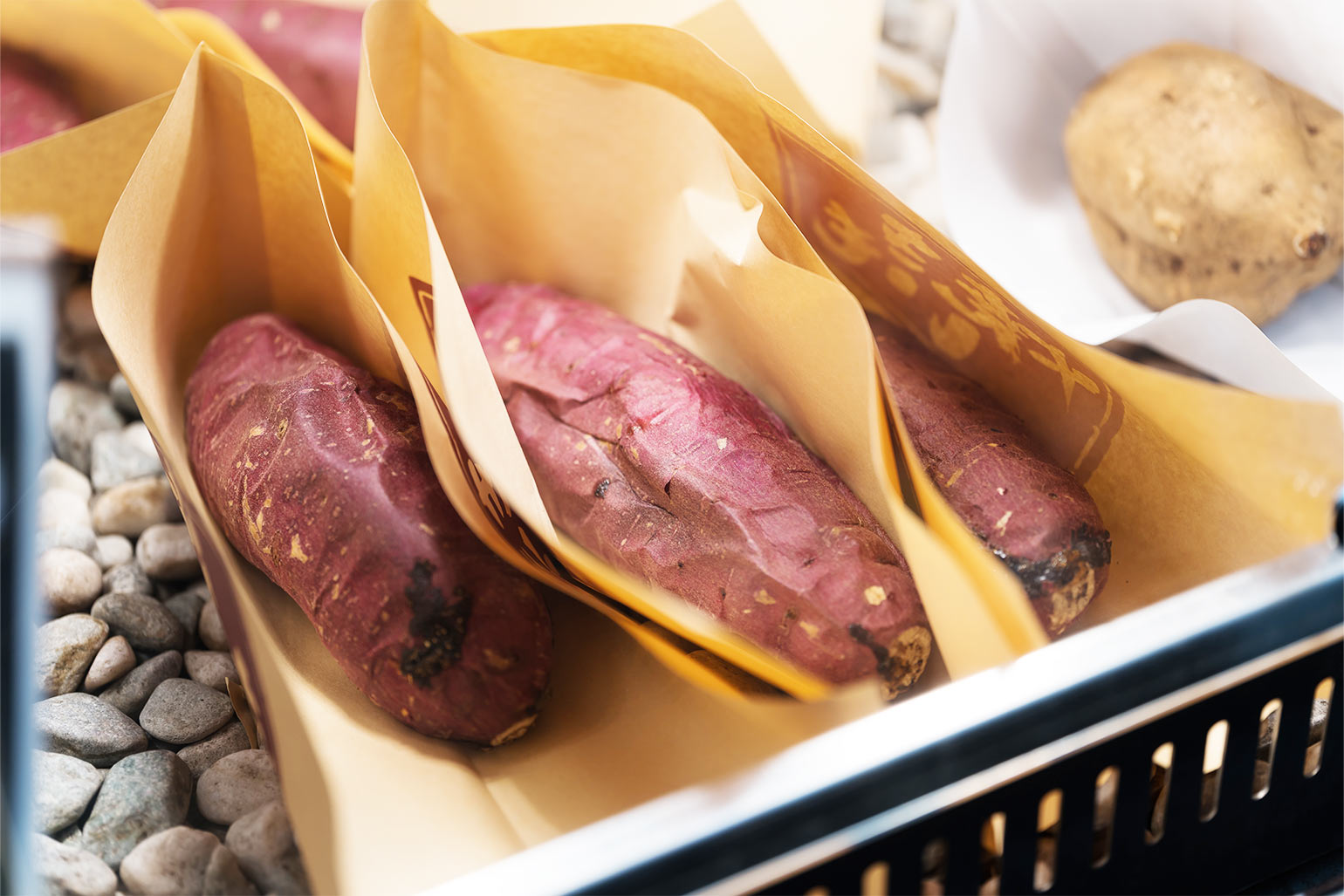
Now, we would like to tell you a little more about baked sweet potatoes. The ingredient for baked sweet potatoes is sweet potatoes. Sweet potatoes are said to have been spread to Japan around the 17th century, arriving around the Satsuma region (present-day southern Kyushu) through the Ryukyu Islands (present-day Okinawa region). By the 18th century, it had begun to be cultivated on Honshu as well, spreading throughout the country. In Honshu, cultivation of them began in Edo (the Kanto region). This region was known for its poor soil, unsuitable for growing most crops, but sweet potatoes could be grown even in such areas of Edo. As a result, cultivation of them began to be started throughout Japan. The rapid spread of sweet potato cultivation throughout the country seems to have been largely due to the fact that it required less labor than rice or other vegetables and was less susceptible to the effects of climate fluctuations such as cold damage. It was also easy to store, which is likely another reason it was favored as a crop. At that time, potatoes were called “Bareisho”, while sweet potatoes were called “Kansho” due to their sweet taste. (※ At that time, Japanese referred to potatoes as “sho”. Additionally, “Barei” meant “bells hung on horses”, and “Kan” meant “sweet”.) Sweet potatoes were often eaten as a substitute for grains like rice, and were also widely used as ingredients in soups and stews. The cooking as baked sweet potatoes was reportedly practiced around the latter half of the 18th century, primarily in castle towns like Edo, Kyoto, and Osaka. Even back then, it was known as a cheap, filling snack. During the Meiji era, it became very popular among the general populace because its price fluctuated less compared to rice. However, during the wartime boom of the Taisho era, demand for sweet potatoes plummeted dramatically… It seems the economic boom has caused the entire population to lose their appreciation for how affordable sweet potatoes are. Furthermore, during the wartime period that continued into the early Showa era, cultivation and sales were restricted because sweet potatoes were designated as a controlled commodity under the Food Control Act. As a result, sweet potatoes temporarily disappeared from the everyday food culture of the common people… The popularity of baked sweet potatoes as a sweets food as we know it today began around 1950. After World War II, in addition to the existing rice-based food culture, a new food culture centered on grains like wheat also became widespread among the general public. This contributed to a shift in the demand trend for sweet potatoes. The demand for sweet potatoes as a staple grain capable of inexpensive mass production, storage, and distribution has disappeared. Compared to before the war, sweet potatoes have become a bit more expensive. That said, demand for sweet potatoes did not disappear entirely. Apparently, baked sweet potatoes were something that perfectly suited Japanese tastes. Despite being overshadowed by the growing demand for fast food and snacks during the period of rapid economic growth, baked sweet potatoes maintained their enduring popularity. In recent years, they have become particularly popular as healthy sweets, and new varieties specifically bred for baked sweet potatoes have also appeared. Baked sweet potatoes themselves aren’t particularly rare in East Asian culinary culture, but it seems few places have pursued continuous quality improvement like Japan has with its baked sweet potatoes.
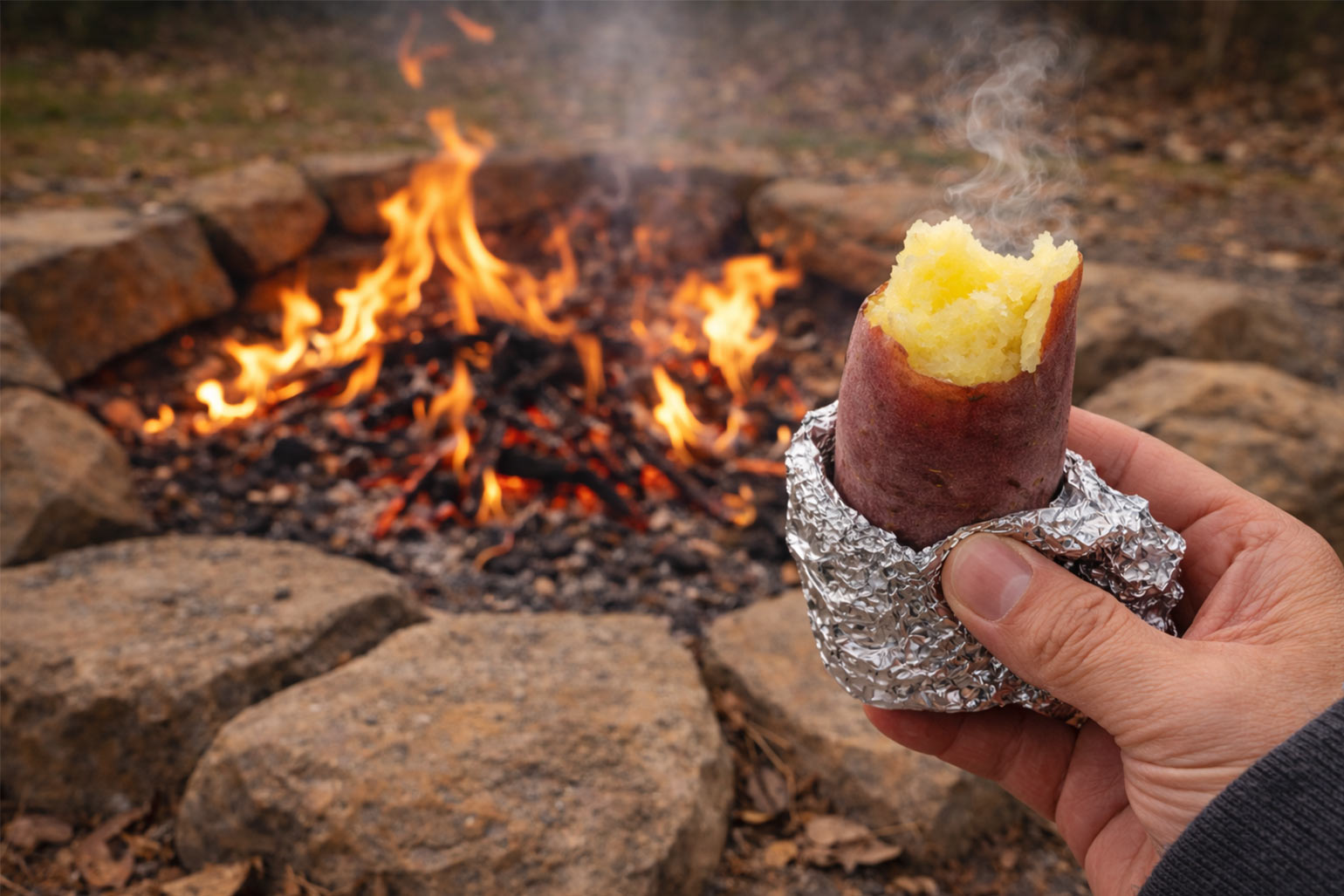
Currently, the Showa retro boom is a hot topic in Japan. The old-fashioned atmosphere of the Showa era is apparently very fresh to the current younger generation. On the other hand, for those who lived through the Showa era, these items evoke nostalgia, and products and services that recreate the culture of that time have become popular. Baked sweet potatoes can also be considered one of those retro Showa-era cultural elements. Back in the day, when winter rolled around, it was a common sight to see people gathering fallen leaves in parks, vacant lots, or their own gardens, and then making bonfires to bake sweet potatoes… Well, it’s a custom that would be utterly impossible in today’s world, where laws and public scrutiny have become so strict. In a way, the popularity of baked sweet potatoes may also stem from how they evoke memories of a simpler, more carefree era.





